As we head to the polls during these last few weeks of this election season, those of us who have been resisting the interrelated harms being inflicted on people and planet continue to hold out hope for transformational change. This will take more than minor changes in representation. We the people will need to continue organizing and putting our hearts into bringing about the radical changes in perspectives and systems that will be needed for a liveable world.
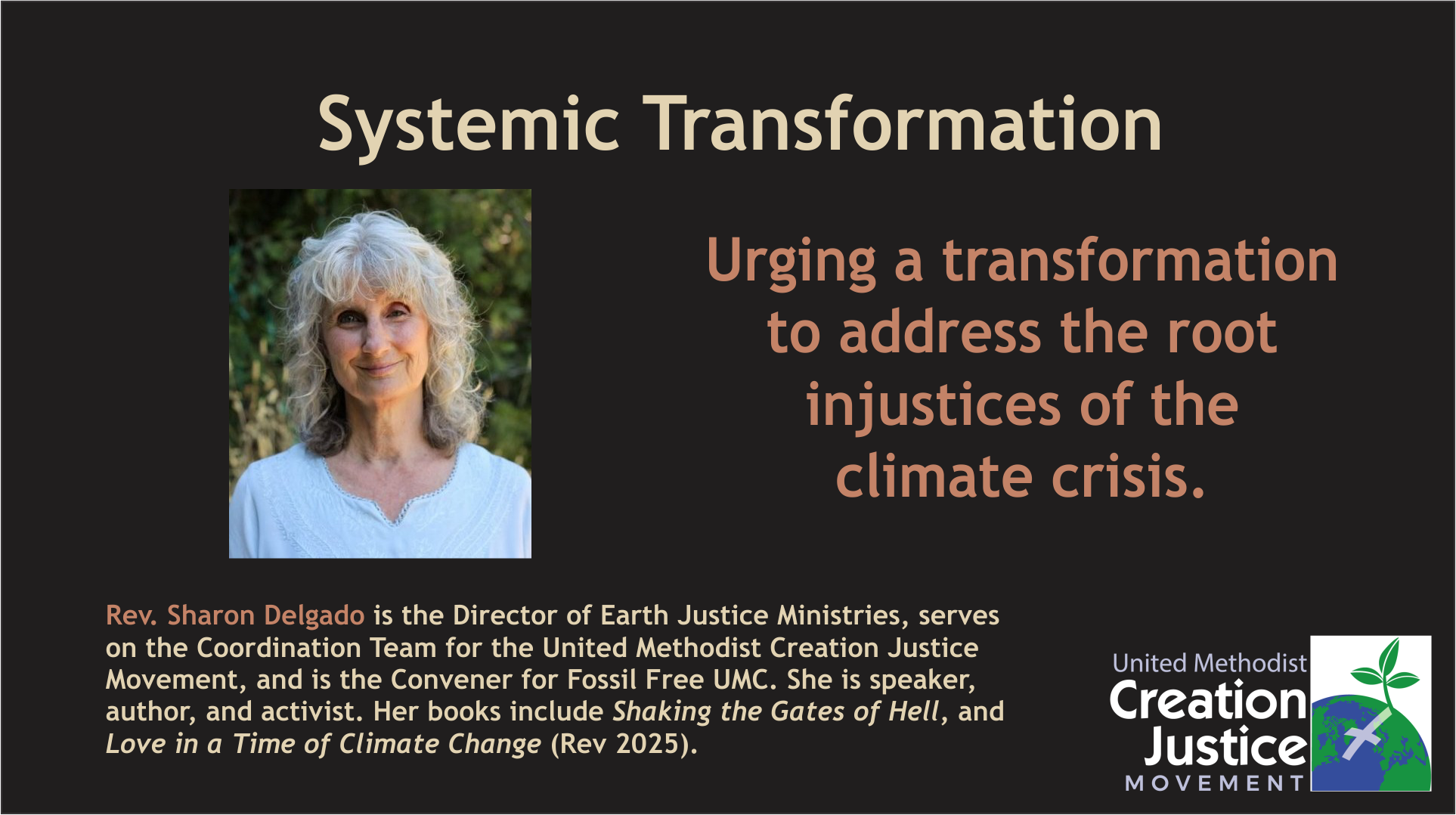
This video is a segment of “Speaking Up for Climate Action: A Training for United Methodist Bishops” that was created and produced by a team of us from the United Methodist Creation Justice Movement in cooperation with the Garrett Collective on Environmental Regeneration. This post includes the transcript of the 5-minute presentation, with a list of related resources.
My previous post shares the press release and gives background and details about the training. See the United Methodist Creation Justice Movement page on the “Speaking Up for Climate Action” page to Watch the two-hour training, to watch other videos from the playlist, or to enroll with the Garrett Collective for free access the list of resources for each section.
Greeting Bishops, clergy and other church leaders. I’m Sharon Delgado. I live in Northern California outside Nevada City, in fire country. Fire season here is now year-round because of climate change.
I’ve been working within the United Methodist Church on climate, environmental justice, and now climate justice since 1992, when I was part of the United Methodist delegation to Rio de Janeiro during the United Nations Conference on Environment and Development, where the foundational climate treaty was signed, the Framework Convention on Climate Change.
At that conference, the nations of the world agreed that to have a sustainable global environment, there had to be sustainable development. In other words, poverty would have to be alleviated. And that meant that the high wealth nations (the nations of the world agreed to this) would have to transfer technology and money to the low wealth nations to help them leapfrog over the kind of fossil-fuel based industrial development that polluted the global environment but also made nations rich.
Fast forward to today: the burden of greenhouse gases in the atmosphere has more than doubled since that time and we still don’t have a workable framework for transferring sufficient funds and renewable technology to nations that need them desperately. Why?
Why? Because there are systemic blocks to climate action that are rarely talked about in general climate conversations. But we United Methodists must talk about it, because the dominant global order in which climate decisions are made is based on a worldview and on values that are in conflict with biblical and Wesleyan values.
Walther Wink called the overarching network of political, economic, military institutional powers and principalities the “domination system.” John Dominique Crossan called it “the normalcy of civilization” because it’s just taken for granted. But that “normal” system is upheld by values that have supported colonization, slavery, patriarchy, every form injustice, colonization of the atmosphere with greenhouse gas emissions, and has turned the gifts of the earth into commodities to be bought and sold.
But we United Methodists have different worldview and different values, based on the values that Jesus taught and demonstrated, based on the vision of the Reign of God, the world as God intends for it to be. That may be the most important gift we bring to the movement for climate justice.
And we are not only ones who share these values and this alternative vision of a world of peace, justice, and environmental sustainability and hope for future. The slogan of the climate justice movement is “system change not climate change.” This movement is led by the most impacted people, most impacted by climate change. People all over world are crying out, speaking boldly, calling for action that is in proportion to the existential challenge of climate change that we face. People are taking strong stands: for instance with the Fossil Fuel Non-Proliferation Treaty, by divesting from fossil fuels and reinvesting in solar and wind energy, calling for a fair phaseout of fossil fuels and a just transition to a clean energy future.
That’s what we need to be doing in the church. And pastors and other church leaders will be much more likely to engage their congregations on these issues if they know they have the backing of their bishops and a mandate from the church.
Learn More about Systemic Change and Climate Action
Comments